Research
We develop computational methods and digital engineering workflows for the design, optimization, and systems engineering of complex engineered systems.
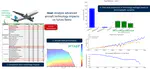
Our work integrates multidisciplinary design analysis and optimization (MDAO), model-based systems engineering (MBSE), and physics-based and data-driven modeling to produce reusable, traceable, and decision-relevant studies. Aerospace systems provide a representative domain for developing and evaluating these methods. In particular, highly efficient aircraft and propulsion systems, including electrified propulsion and alternative-energy architectures, expose strong coupling across disciplines, architectures, and operations.
Work With Us
Focus Areas:
Multidisciplinary Design, Analysis & Optimization
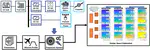
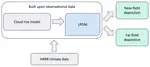
We study MDAO for large, tightly coupled problems that are naturally mixed-variable: key architecture and topology decisions are discrete, while sizing and operational variables are continuous. We develop scalable formulations and workflows that combine multi-fidelity simulation with surrogate and machine learning predictors to accelerate design space exploration, screening, and sensitivity analysis while maintaining clear links to underlying assumptions and constraints.
Robust Design & Decision Making at the Systems Level
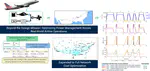
We study design under variability by explicitly representing uncertainty in subsystem/system model inputs, boundary conditions, technology assumptions, and operating context. We quantify how changes at the subsystem levels propagate (often nonlinearly and iteratively) into system-level performance, feasibility, and constraint satisfaction, and we identify designs and architectures that remain viable across plausible scenarios. The resulting analyses are structured to support systems engineering decisions by making the drivers of trade-offs explicit and traceable to the assumptions and models that generated them.
Digital Engineering & AI-Augmented Design
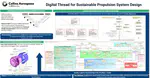
We build traceable digital engineering workflows that connect requirements, architectures, assumptions, analysis models, and generated datasets through MBSE-centered digital threads (often using SysML-based environments coupled to analysis and optimization). These workflows support consistent data exchange and reproducible trade studies across tools and teams, and they provide a foundation for digital-twin-ready model integration where appropriate. We also explore AI-augmented methods for both workflow automation (accelerating integration and iteration) and generative design (systematically generating and screening candidate architectures and configurations), with an emphasis on transparency, verification, and traceability.