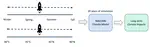
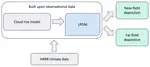
Rocket launch emissions, dominated by black carbon, H2O, and NOx, are known to contribute to changes in atmospheric composition that can influence Earth’s climate, particularly for the large annual launch rates expected in the future. This study quantifies how the timing and location of rocket launches shape their long-term atmospheric effects. Using 20-year WACCM6 simulations, we compare launches from six latitudes and across seasonal patterns (summer-only, winter-only, and year-round). Results show that while Northern Hemisphere launches cause less global stratospheric warming, they lead to stronger ozone depletion. Seasonal effects are most pronounced near the equator, where the reversal of tropical winds amplifies variations in radiative forcing and ozone loss.