Fleet Level Operations And Technology Integration Environment
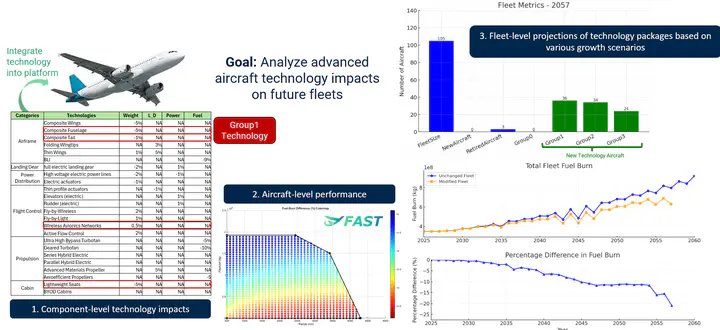
Novel aircraft design must be evaluated from the system level to the fleet level to fully understand the impact of new technologies, operational strategies, and long-term fleet integration. The Fleet Level Operations and Technology Integration Environment (FLOATIE) was developed to bridge this gap by coupling physics-based aircraft modeling with fleet-scale evolution and forecasting.
FLOATIE integrates directly with the Future Aircraft Sizing Tool (FAST) to perform detailed aircraft sizing and off-design performance analysis. Technology upgrades—such as hybrid-electric propulsion, advanced aerodynamics, or more-electric subsystems—are modeled using technology impact factors that quantify changes in weight, lift-to-drag ratio, power demand, and fuel burn.
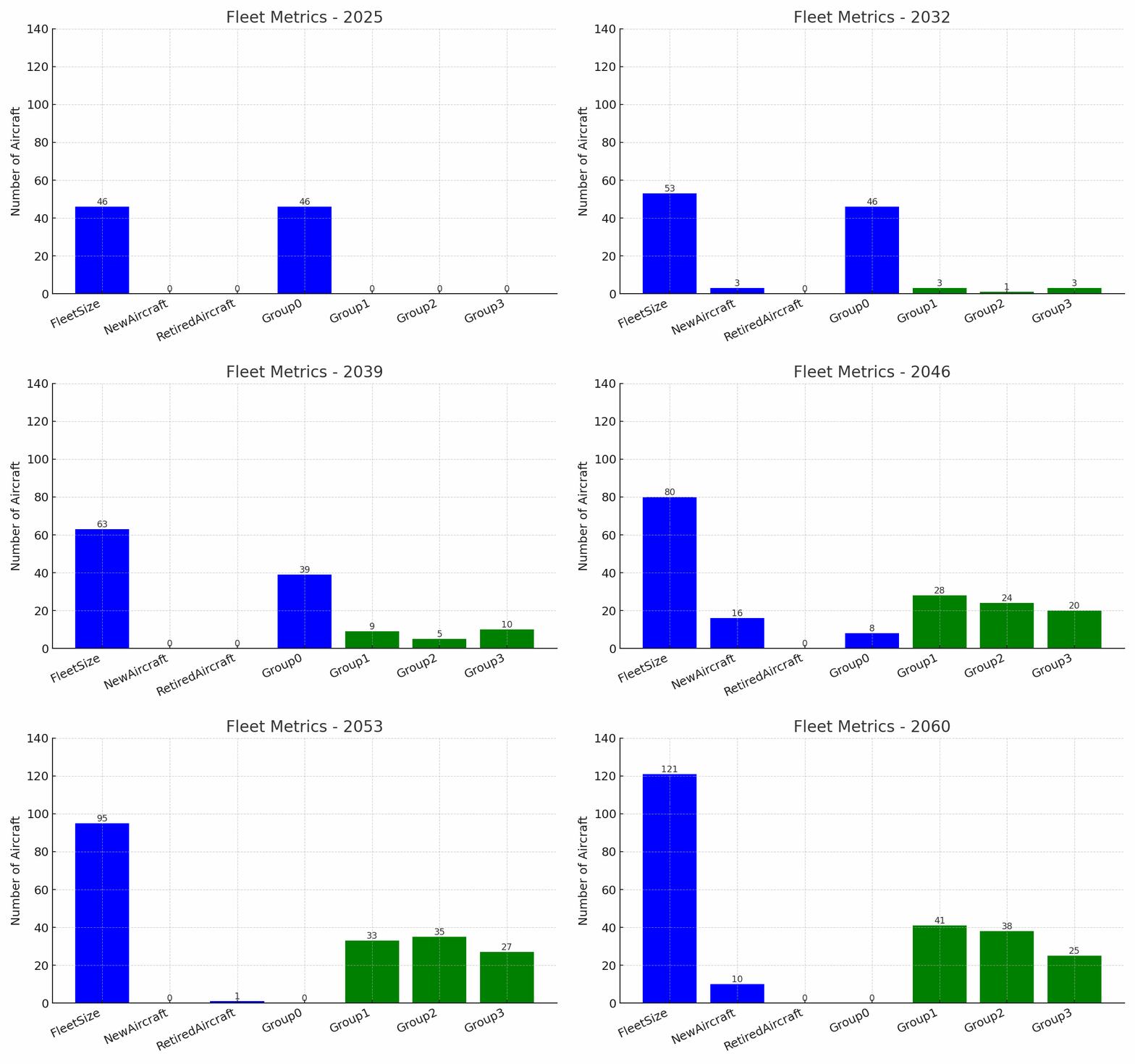
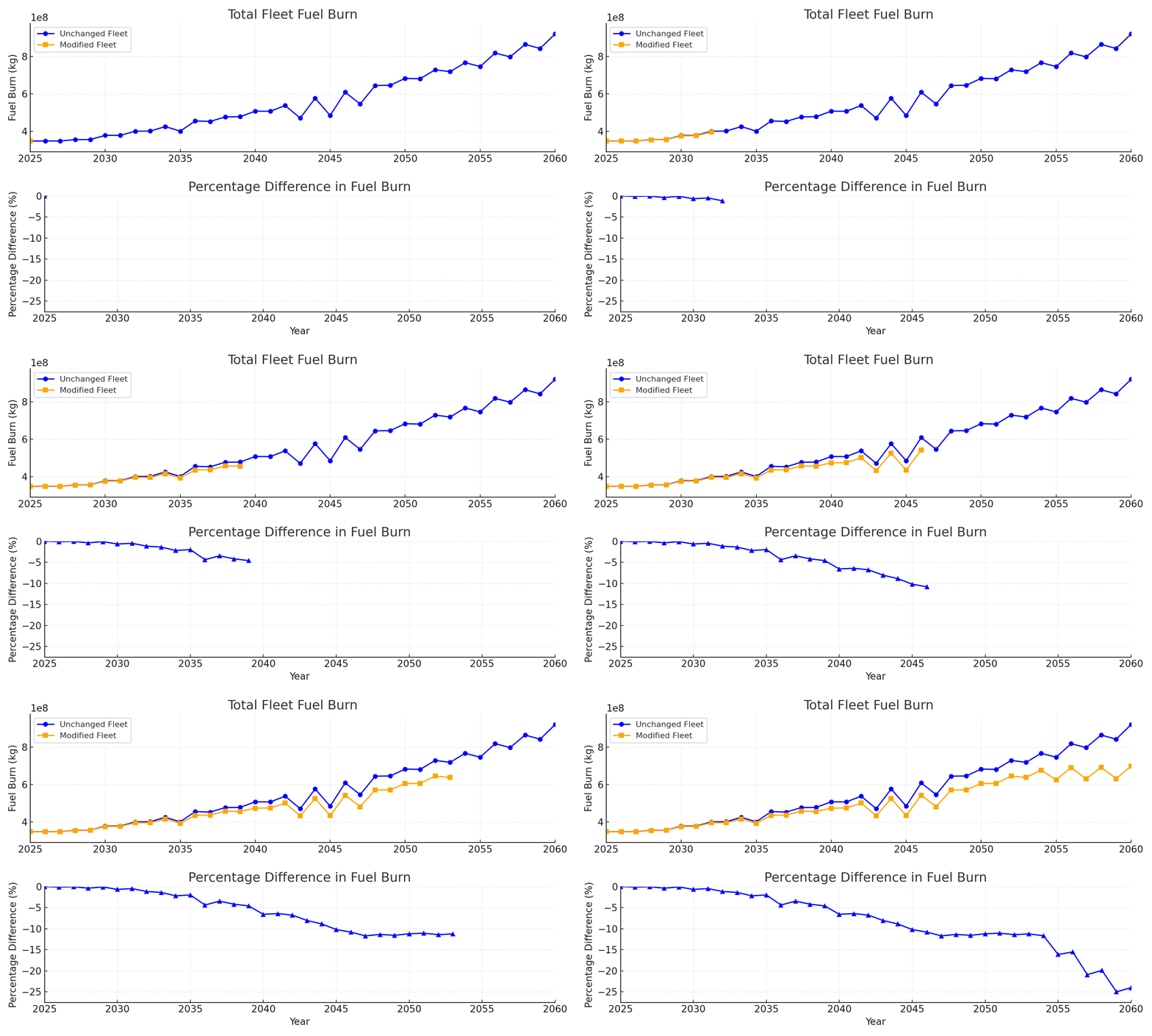
At the fleet level, FLOATIE simulates aircraft retirement, replacement, and introduction schedules using traffic growth rates and utilization data to evolve the fleet year by year. This enables long-term forecasting of fuel consumption, emissions trends, and fleet composition under different technology and operational assumptions. The framework supports payload-range comparisons, air traffic management efficiency assessments, and probabilistic technology adoption modeling to evaluate the combined effect of emerging technologies and policy changes.
Together, these capabilities make FLOATIE a multi-scale decision-support environment that connects detailed aircraft performance modeling with strategic fleet-planning insights—helping identify which technologies and operational improvements offer the greatest system-wide benefits for sustainable aviation.
This work was sponsored by Collins Aerospace under the Emissions Forecasting project.

Emma Cassidy
PhD Student and Graduate Research Assistant
Emma is a PhD candidate in Aerospace Engineering at the University of Michigan and works as a Graduate Student Research Assistant in the IDEAS Lab. Her research interests are sustainable aviation, experimental aircraft design, and commercial aircraft operations.