NASA’s Advanced Aircraft Concepts for Environmental Sustainability (AACES) 2050
 Artist’s concept for a decarbonized commercial airliner.
(Credit: Electra.aero)
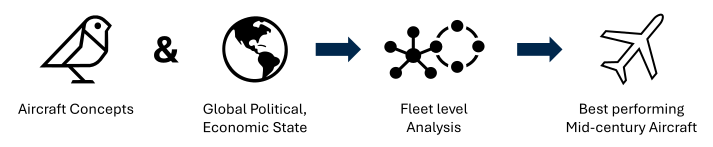
The AACES 2050 initiative develops future scenarios and evaluates advanced aircraft concepts against those scenarios to inform technology roadmaps and risk profiles. Dr. Çınar serves as the Principal Investigator for the University of Michigan’s contribution to AACES 2050, leading research on systems-level aircraft design, modeling, and integration methods. Our team focuses on conceptual aircraft development, subsystem modeling, and code architecture to support the broader program goals.
In collaboration with Electra.aero and the MDO Lab at the University of Michigan, the we have co-developed the multi-Fidelity Integration Network for Conceptual HEAs (FINCH), which is a python library of subsystem models and aircraft concepts that is built atop NASA’s aircraft design code Aviary. The FINCH framework is designed to easily swap subsystem fidelity levels when designing aircraft concepts. This allows rapid low-fidelity prototyping and design space exploration early on, with options to increase confidence in down-selected designs through higher fidelity subsystem models.
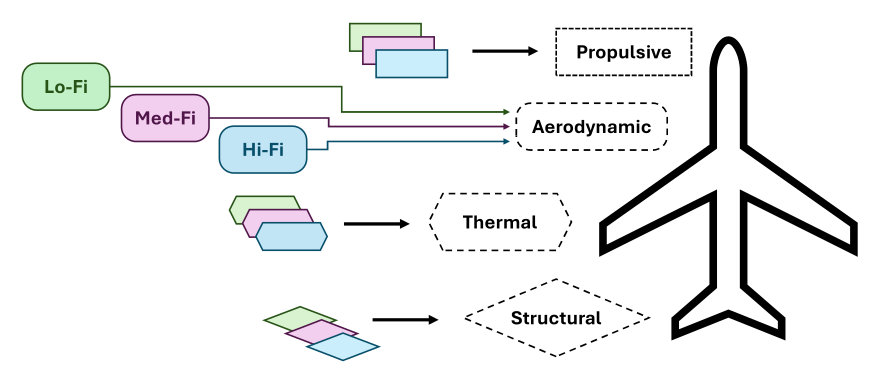
FINCH integrates with scenario assumptions (e.g., energy prices, demand profiles) to assess architecture-level feasibility and performance. Fleet-level assignment and down-selection are performed in collaboration with University of Michigan’s LATTICE group, where candidate concepts are compared on cost, noise, and other program-relevant metrics. The combined workflow supports disciplined down-selection, clearer technology dependencies, and defensible planning for follow-on maturation.
Collaborators:

Maxfield Arnson
PhD Student and Graduate Research Assistant
Maxfield Arnson is a graduate student research assistant in the IDEAS Lab at the University of Michigan.
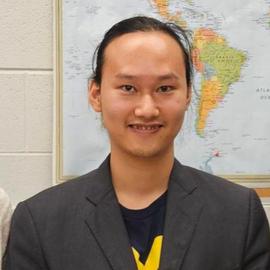
Triết Hồ
PhD student and Graduate Research Assistant
Triet is a PhD student in the Aerospace Engineering department at the University of Michigan.